
The 2027 budget of the Hauts authority, in six charts
24.6 million euros, 18.2 of them running costs. Six charts for six questions: where the euro goes, who provides it, what is rising, what is falling, debt per head, and what is left to fund.
Hakim Zerrouki5 min read
An opening budget is presented to the chamber in forty minutes, with tables nobody can read from a distance. It is then voted through in one go, without the simplest questions having been asked.
This piece asks six questions in advance and answers them from the published documents. No editorial line: what is written here is what the document says, and nothing more.
One point of scope, before the figures. The 24.6 million are those of the general budget. Water and sewerage are voted separately, in ring-fenced budgets that must balance on their own revenue: none of what follows concerns them, and no euro of the general budget can be paid into them.
24.6M€
total size of the 2027 budget
18.2M€
running costs section
6.4M€
capital section
Where the euro goes
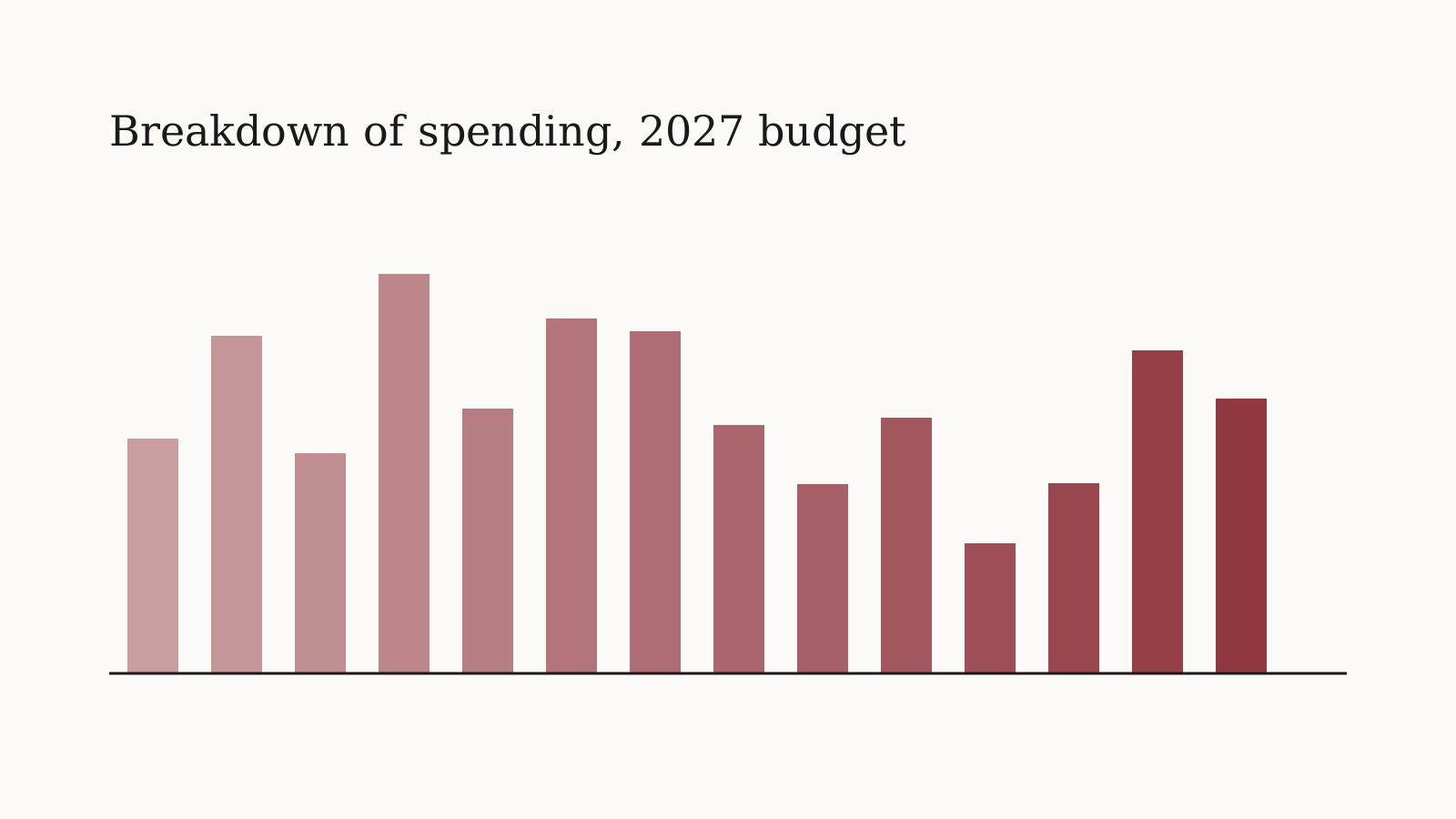
Of every hundred euros spent, running costs absorb seventy-four. That is the usual proportion for an authority of this size, and calls for no comment in itself.
What does call for one is its breakdown: staff costs and contributions to outside joint boards — including the sewerage board named in our water series — together account for more than half of running costs. These are two items an annual vote can do almost nothing about.
A third item deserves pulling out of the table, because it is the only service the authority has created on its own initiative in ten years: the express coach from Val-d'Ambre to the lower station, opened in September 2024, six return trips a day. It costs 1.9 million euros a year and is 62 % grant-funded, which leaves 722,000 euros to the authority. Set against the 128,000 journeys of the 2025-2026 season, the trip works out at 14.80 euros, of which 5.60 euros paid by the authority. That figure has never been put to the chamber; it takes two lines of the operating report and one division.
The 6.4 million of capital spending, for their part, carry no dominant project. Roads 1.7 million, school buildings 1.2, waste collection and the recycling centre 0.8, the business park 0.9, equipment and IT 0.5; the balance of 1.3 million is spread over twenty-seven operations, none above 150,000 euros. This is a maintenance budget, not a project budget, and that is a fact rather than a reproach.
74%
share of running costs in total spending
21schools
with 1 class closing in September 2026
2GPs
for 17,400 residents
Who provides it
Three sources: direct taxation, state grants, and own revenue — charges, sales, contributions. The grant share is the only one of the three that has not risen since 2019 in current euros; it has therefore fallen in constant euros.
The order of magnitude fits in one sentence. Grants were worth 4.9 million in 2019 and are worth 4.9 million in the 2027 budget; with cumulative inflation over those eight years running at 22 %, they have lost 18 % of their purchasing power, a little under 900,000 euros a year.
The gap has been made up by direct taxation, without any rate increase: it is the base that grew, along with second homes. 2,380 dwellings, or 24 % of the housing stock. That compensation has a flaw no document flags: it makes the budget's balance depend on the very thing that is tightening the housing market, and over which the authority has no hold at all.
What is rising, what is falling, and the debt
Two items rise clearly: building energy and contributions to joint boards. One falls: grants to community organisations, steadily over three years, without any vote ever having been taken on that choice — it is the outcome of the annual trade-off, not of a stated decision. They go from 214,000 euros in 2024 to 176,000 in the 2027 budget, 18 % in three years; the Hauts festival, marking its twentieth edition, accounts for 34,000 of that on its own.
One amount also rises without carrying a name, and you have to go looking for it. The Monteclair 1450 ski area closed its season on 480,000 euros of operating deficit. That sum is indeed in the document — it turns up as an end-of-year adjustment, in a chapter of exceptional charges, without the word "resort" appearing anywhere. It is twice the total of grants to community organisations, and 2 % of the budget. No vote has ever been taken on the principle of it.
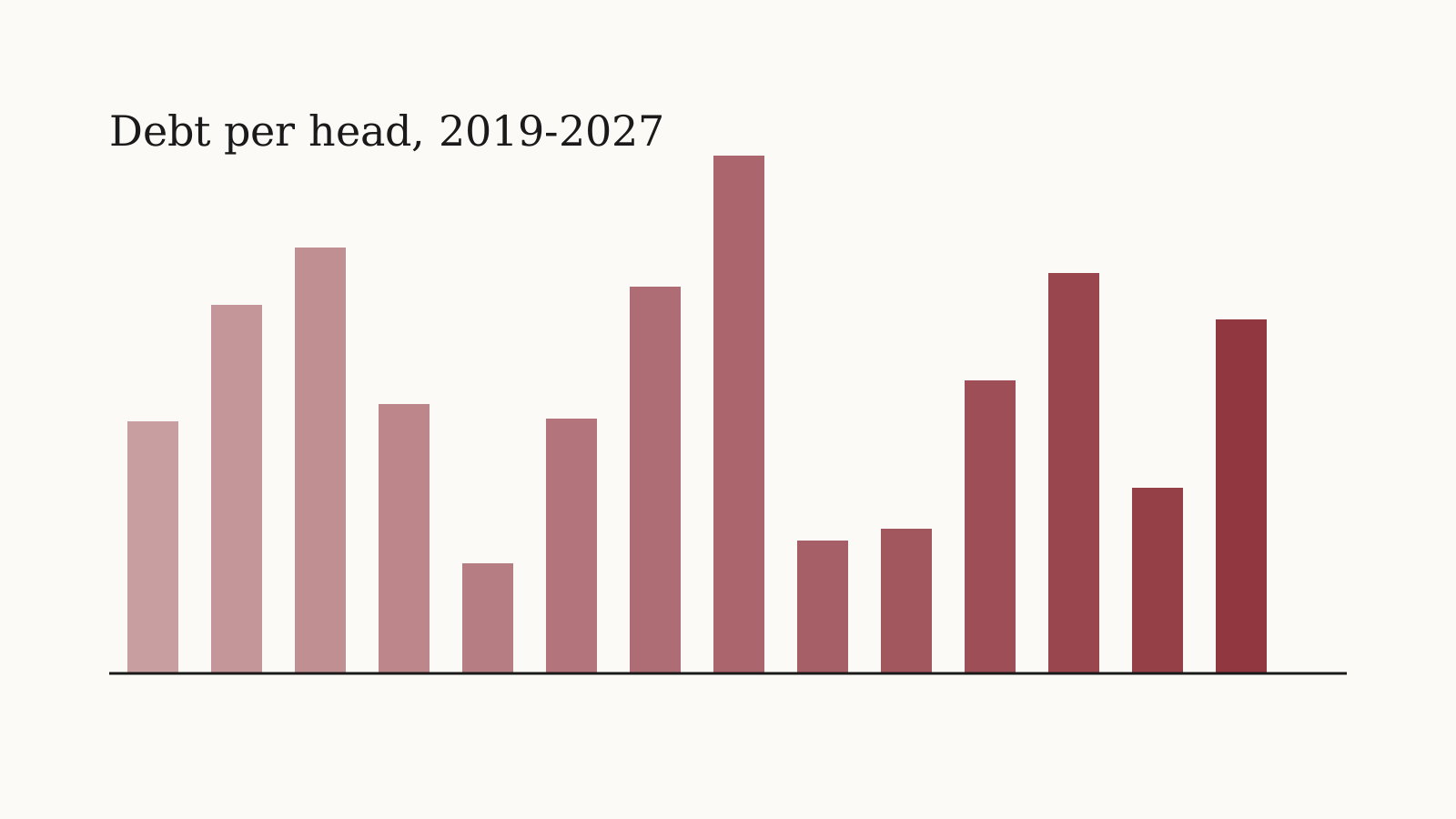
Debt per head, for its part, has been stable since 2019: 412 euros, an outstanding balance of 7.2 million euros for 17,400 residents. It stays stable in the 2027 budget, but the local plan's unfunded balance does not appear in it yet.
412€
of debt per head, unchanged since 2019
5.60€
what the authority pays for each express coach journey
480,000€
of deficit cover paid with no line in its name
That is the one line genuinely missing from the document, and it is flagged in an annex: the local plan, due for approval in 2027, carries facilities whose funding is not identified. So the question will not arise this year. It will arise next year, at whatever size it has been allowed to reach.
The two figures to hold on to until then take one line each. Debt stable at 412 euros a head leaves borrowing capacity. A capital section of 6.4 million already absorbed by routine maintenance leaves none without borrowing.