
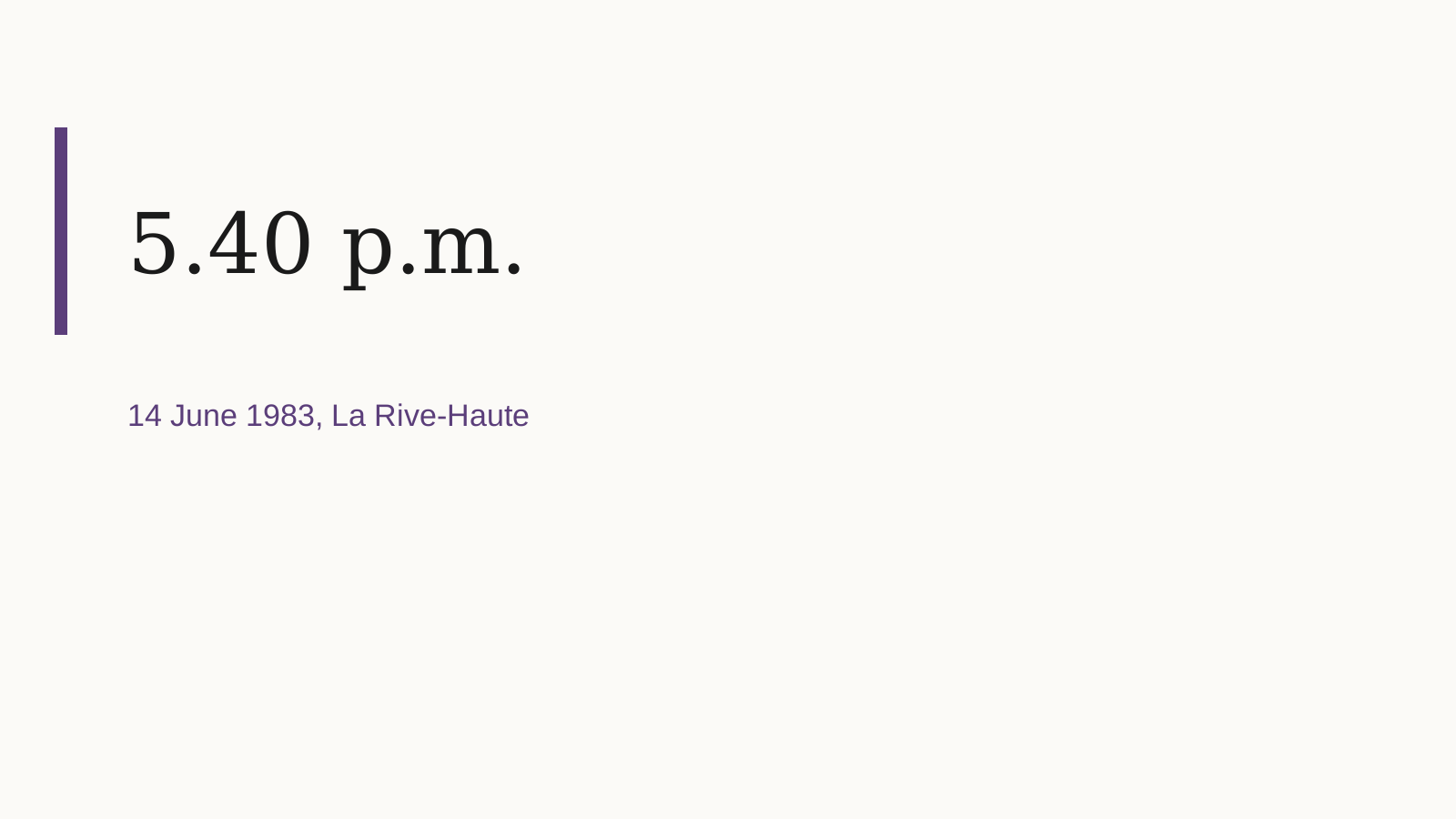
14 June 1983, the mill's last day
214 staff, 168 of them women. On 14 June 1983 the La Rive-Haute mill produced until 5.40 p.m. Hour by hour, what that last day was — the workshop register, the production book and six memories.
Noëlle Vasseur5 min read
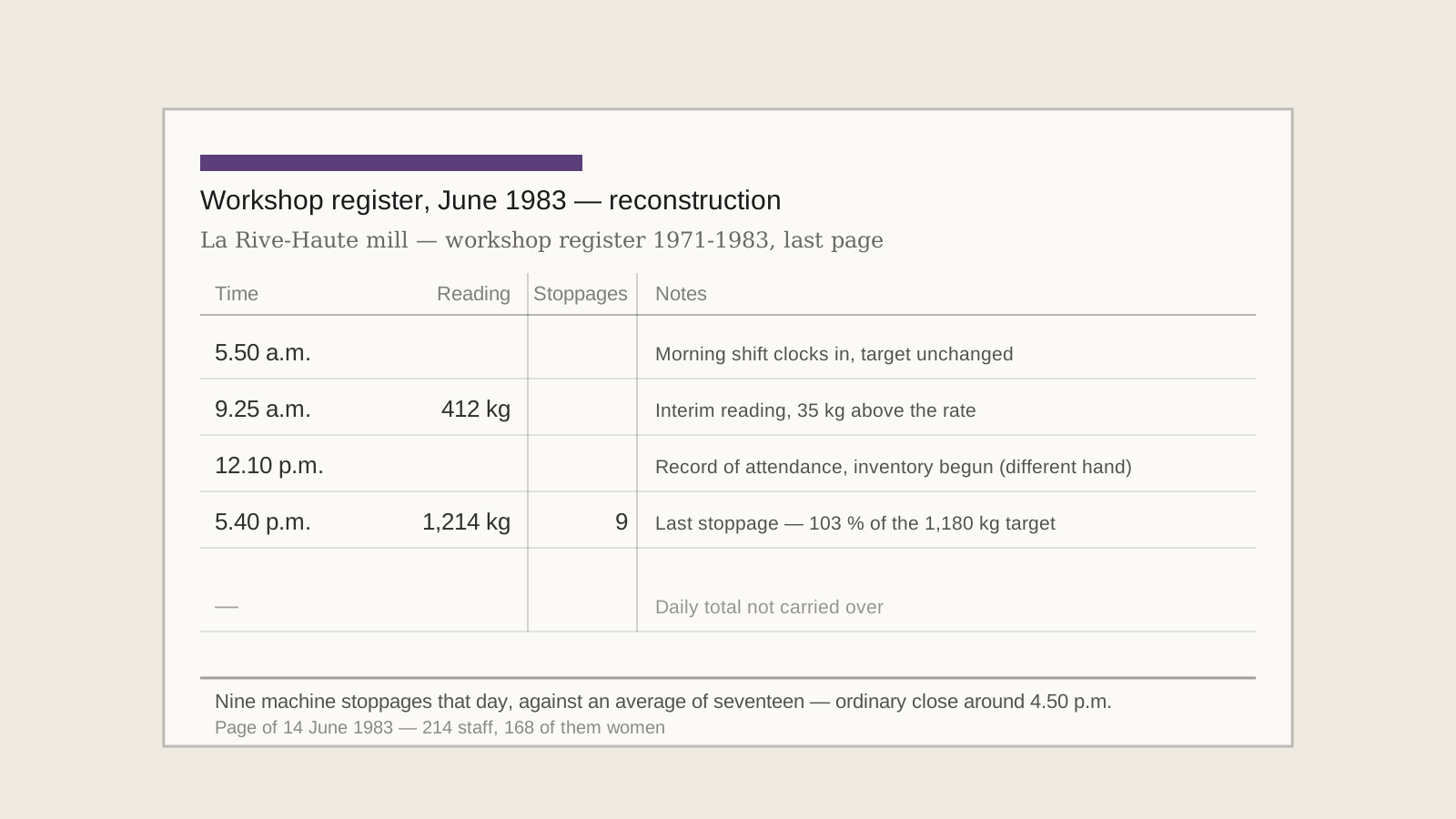
The workshop register of the La Rive-Haute mill covers 1971 to 1983. The last page carries the date of 14 June, a column of hourly readings, and one line of handwriting that stops halfway.
It escaped the liquidation because a foreman took it home that evening, and it entered this newsroom's archive in 2019, together with the production book for the last eighteen months. For this mill it is the only surviving written source: the personnel registers, for their part, are gone — and it is that disappearance which, forty years later, is stopping five former workers from getting a claim through.
This piece does not say what the closure means. It tells the day, in order, from three sources that corroborate one another: the register, the production book, and six people who were there. The political reading belongs to the four instalments that follow.
214staff
168 of them women, on the last day of production
1,214kilograms
of yarn produced on 14 June, 103 % of target
111years
of activity, from the opening in 1872 to the closure
9machine stoppages
that day, against an average of seventeen
5.40 p.m.
the time of the last stop, fifty minutes after an ordinary day's end
5.50 a.m. — the morning shift
The morning shift clocks in at 5.50, as on any other day. For that date the production book carries an unchanged target. Nothing in the documents distinguishes the start of this day from an ordinary Monday.
The closing date had been known for six weeks: it was announced to the works committee in April, a hundred and eleven years after the mill opened, in 1872. What all six accounts agree on is that output was held to the end, and that nobody was told to slow down.
Two of them add the same detail, which appears nowhere in writing: the changing room that morning was quieter than on a Monday back at work, and it stayed that way.
We knew. We did the movements anyway. It is what we knew how to do, and there was no other way to finish.
9.25 a.m. — what the book counts
The production book is not a document of memory: it is a control tool, kept line by line, in which a wrong figure showed up the next day. That is what makes it the surest source for the day.
For 14 June it gives a target of 1,180 kilograms of yarn and an interim reading at 9.25: 412 kilograms, thirty-five kilograms above the theoretical rate. The day will close at 1,214 kilograms, 103 % of target — the best result of the last eleven working days, and the third best of the year.
That figure is not an anecdote, and it does not reduce to a formula about working-class dignity. A spinning mill does not produce more because its workers want it to: it produces more when the frames break down less, that is when nobody falls behind on piecing. The book records nine machine stoppages that day, against an average of seventeen. Three of the six accounts give the same explanation, without having compared notes: the fitters stayed down in the alleys all day instead of moving between floors.
The winding room was due to stop, as on every day, after eleven hours of running.
12.10 p.m. — the bailiff comes through
At 12.10 the register carries a handwritten note in a hand different from the rest of the page. It is the only outside intervention recorded that day.
Two of the six accounts place it in the canteen, two in the foreman's office, and the last two do not remember. That disagreement is kept as it stands: forty-three years later, there is no reason to settle it.
The note itself is brief and purely material — a record of attendance and an inventory begun. It carries no employee's name. It is one of the few documents of that day written to last, and it says nothing of what was going on around the man writing it.
5.40 p.m. — the last machine
The production book stops at 5.40. That is the time on the final line, followed by a daily total that was never carried over.
Four of the six accounts give the same time without having seen the document. The other two say "around six". It is the only piece of that day on which written and spoken sources agree so precisely.
The time carries a meaning the register makes it possible to establish: ordinary days close in it at around 4.50 p.m. On 14 June the machines ran fifty minutes longer. None of the six recalls an instruction to that effect; two say they "finished the doff", meaning they ran out the bobbins already on the frames rather than leave them half full. It was a shop-floor decision, taken without orders, and it is the last one this building ever recorded.
There was no speech. Someone cut the power, and the noise stopped. It is the silence we all kept, not the time.
Two years. I was there two years. And it is the only thing people have asked me about for forty years.